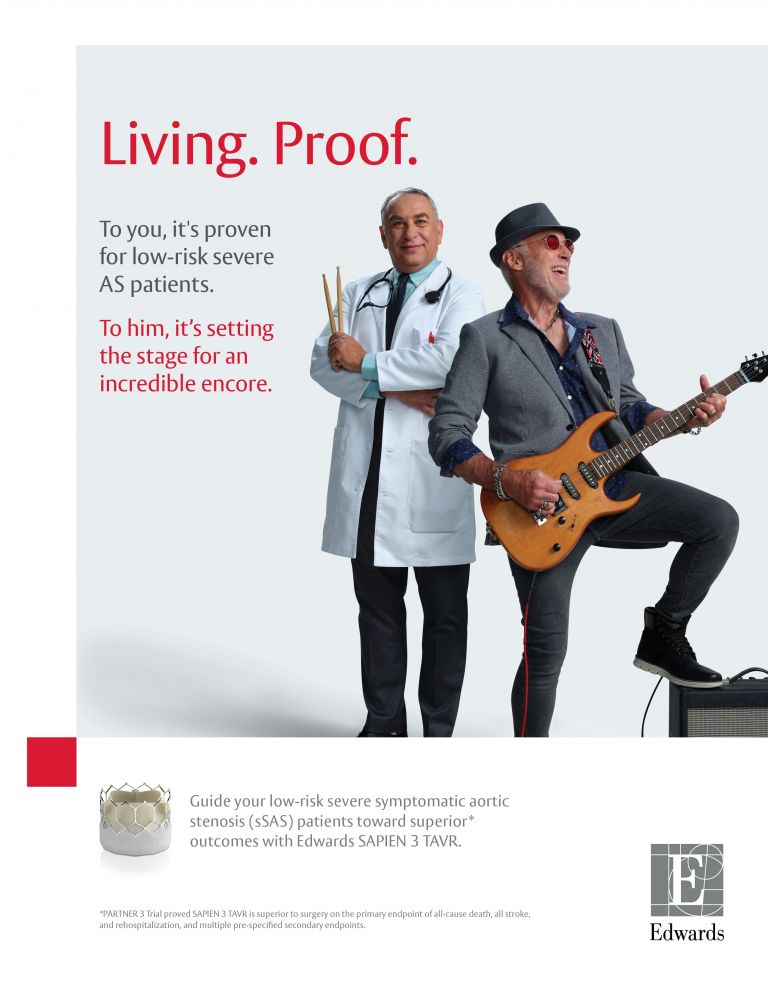
Low-Risk Referrer Brochure
Read more about TAVI for low-risk severe AS patients
In the past, TAVI was limited to high- and intermediate-risk patients, which meant only 2 of 10 patients were eligible and approximately 80% received open-heart surgery. Today, you no longer have to limit the less-invasive option to your sickest and oldest patients—you can guide your severe symptomatic aortic stenosis (AS) patients to better outcomes, independent of surgical risk.
Low-risk severe AS patients are a unique population, with fewer comorbidities (COPD, CAD, and pacemaker) and a mean age 10 years younger than those studied in previous PARTNER Trials.1-3 For many low-risk patients, severe AS is their primary health concern. With Edwards SAPIEN 3 TAVI, you can guide your low-risk patients to a lower-risk option, and help them get back to their lives sooner.
In lower-risk patients, the long-term durability of transcatheter heart valves is an important consideration because of the greater potential for longevity.*†‡ Testing simulating 20 years wear with the SAPIEN 3 Transcatheter Heart Valves indicated no structural valve deterioration and/or functional impairment.*
*Edwards AWT data on file.
†Requirements per ISO standard 5840-3:2013 except for limited sample size and test configuration (n = 8).
‡Pressures were ≥100 mmHg for 0 – 200 million cycles and ≥120 mmHg for 200 million – 800 million cycles.
Sathananthan 2019: https://www.jacc.org/doi/full/10.1016/j.jcin.2019.07.049.
Note: Long-term durability in humans is still the subject of ongoing clinical research. Regular medical follow-up is advised to evaluate valve performance
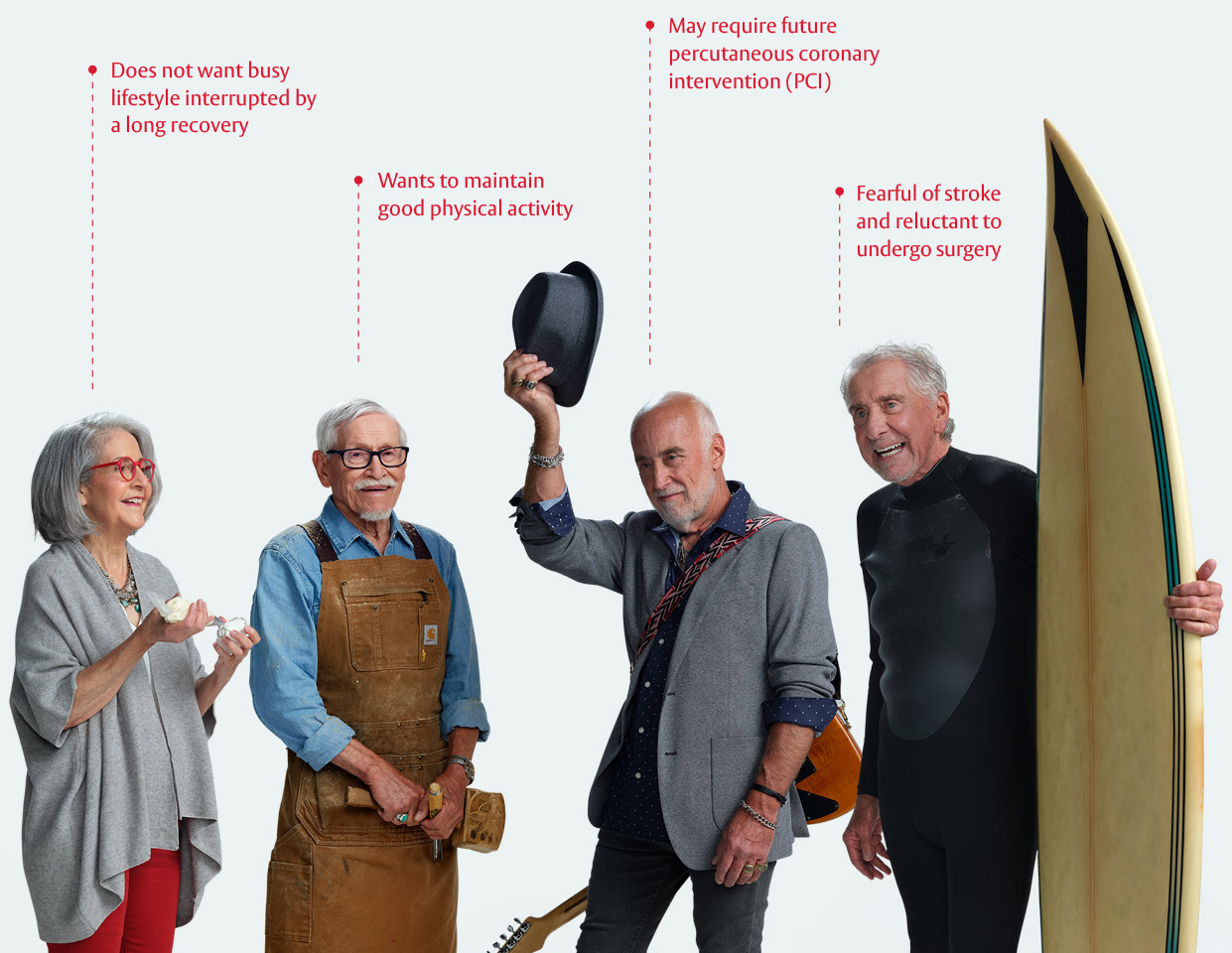
The following patient profiles can help you better understand the patient types indicated for TAVI.
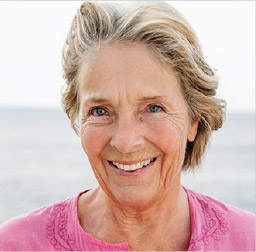 Susan, age 73
AS disease progression:
Severe AS, symptoms include decreased exercise tolerance
NYHA class: II
Frailty indicators:
0
Surgical risk score: 2
Comorbidities:
None
QoL expectations:
Retired nurse who enjoys frequent travel, working out, and bike rides. She looks forward to an extended life expectancy due to her age and active lifestyle.
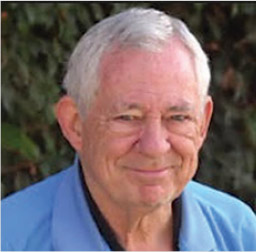 David, age 81
AS disease progression:
Severe AS, symptoms include fatigue, dyspnea upon exertion
NYHA class: III
Frailty indicators:
Passed 3 out of 4 with exception of grip test
Surgical risk score: 6
Comorbidities:
Diabetes, high blood pressure, previous PCI. No other comorbidities.
QoL expectations:
Semi-retired executive for an insurance company. Enjoys walking trails around his home and playing with his grandkids.
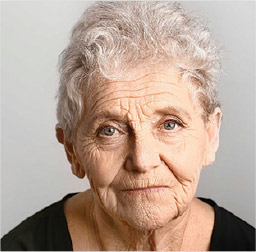 Patricia, age 88
AS disease progression:
Severe AS, symptoms include reduced mobility and inability to walk short distances
NYHA class: III
Frailty indicators:
Failed 4/4
Surgical risk score: 10
QoL expectations:
Retired teacher, and requires assistance in daily life activities.
These are a portrayal of typical TAVI patients and not real patients.
The Edwards SAPIEN 3 Transcatheter Heart Valve System and Edwards SAPIEN 3 Ultra Transcatheter Heart Valve System are indicated for relief of aortic stenosis in patients with symptomatic heart disease due to severe native calcific aortic stenosis who are judged by a Heart Team, including a cardiac surgeon, to be appropriate for the transcatheter heart valve replacement therapy.
The Edwards SAPIEN 3 Transcatheter Heart Valve System and Edwards SAPIEN 3 Ultra Transcatheter Heart Valve System are indicated for patients with symptomatic heart disease due to failure (stenosed, insufficient, or combined) of a surgical bioprosthetic aortic or mitral valve who are judged by a Heart Team, including a cardiac surgeon, to be at high or greater risk for open surgical therapy (i.e., predicted risk of surgical mortality ≥8% at 30 days, based on the STS risk score and other clinical comorbidities unmeasured by the STS risk calculator).
References: 1. Mack MJ, Leon MB, Thourani VH. Transcatheter Aortic-Valve Replacement with a Balloon-Expandable Valve in Low-Risk Patients. N Engl J Med. 2019;380(18):1695-1705. 2. Leon MB, Mack MJ. PARTNER 3: transcatheter or surgical aortic valve replacement in low risk patients with aortic stenosis. Presented at ACC 2019; March 2019; New Orleans, LA. 3. Leon MB, Smith CR, Mack M. Transcatheter aortic valve implantation for aortic stenosis in patients who cannot undergo surgery. N Engl J Med.